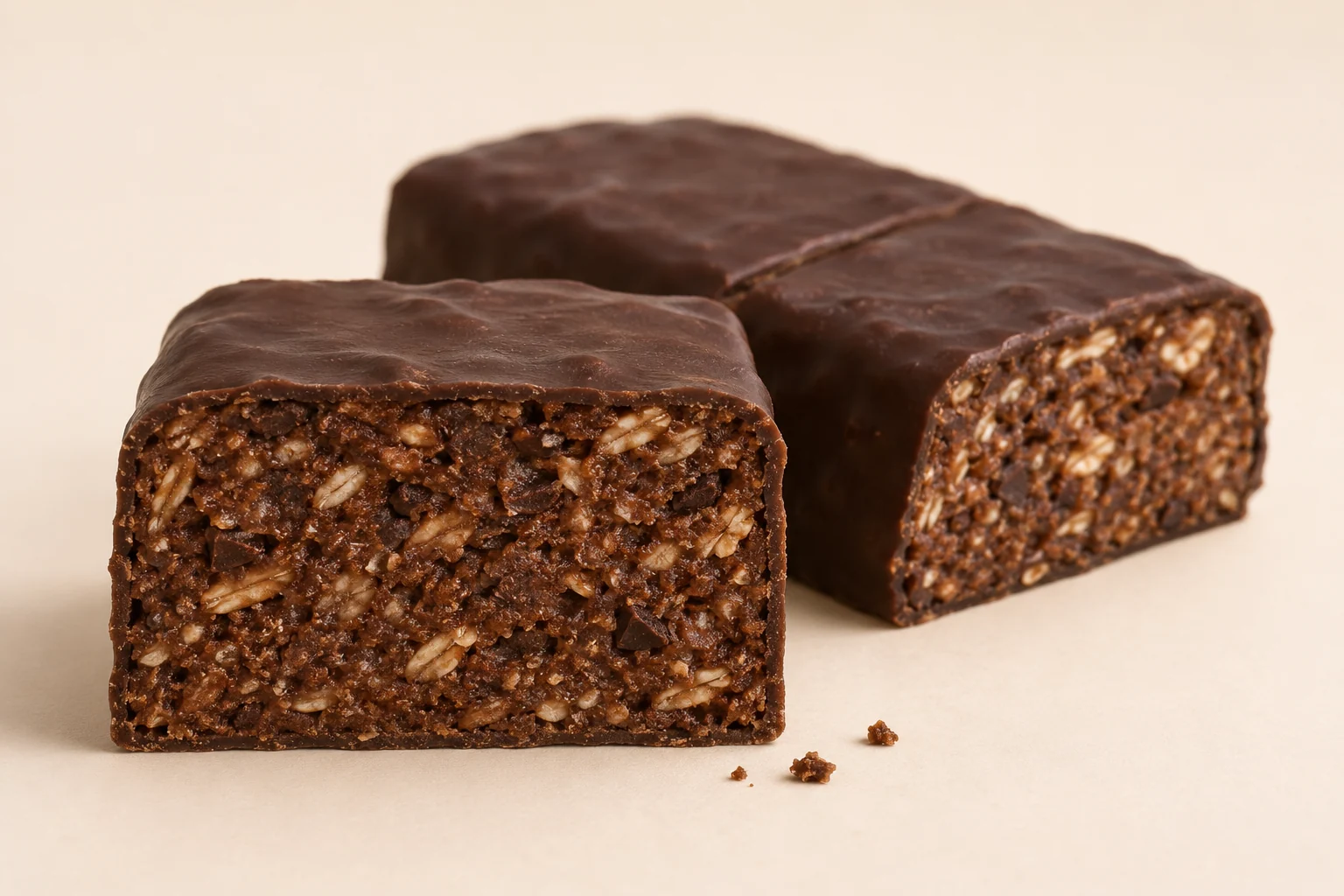
Protein target per whole bar
33g
More room for oats and nuts.
- Energy target
- 1,000 kcal
- Carbohydrate target
- 100g
- Fat target
- 52g
A compact, chewy oat-and-nut centre with small visible inclusions.
Know what you’re choosing
Every flavour targets 1,000 kcal per whole bar. Choose a formulation targeting 33g, 66g or up to 100g protein. The carbohydrate, fat and ingredient balance changes with it. None of these figures is guaranteed before final formulation testing.
Same energy target. Different blend.
Every flavour has three formulations in development. More protein changes the balance of ingredients and the texture of the centre.
Protein target per whole bar
More room for oats and nuts.
A compact, chewy oat-and-nut centre with small visible inclusions.
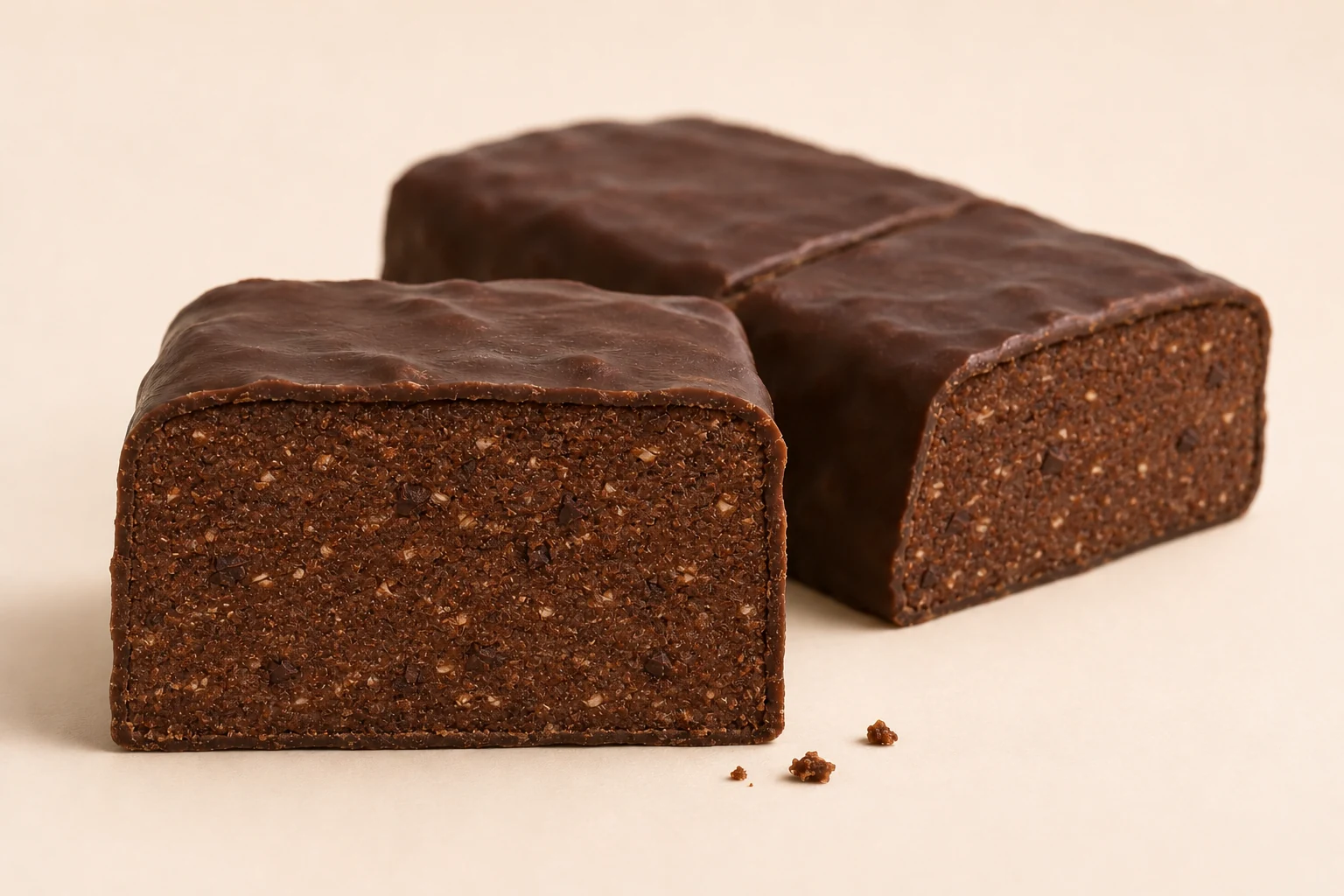
Protein target per whole bar
A finer protein-and-oat blend.
A firm, finely blended centre with a few small inclusions and a short, fudge-like bite.
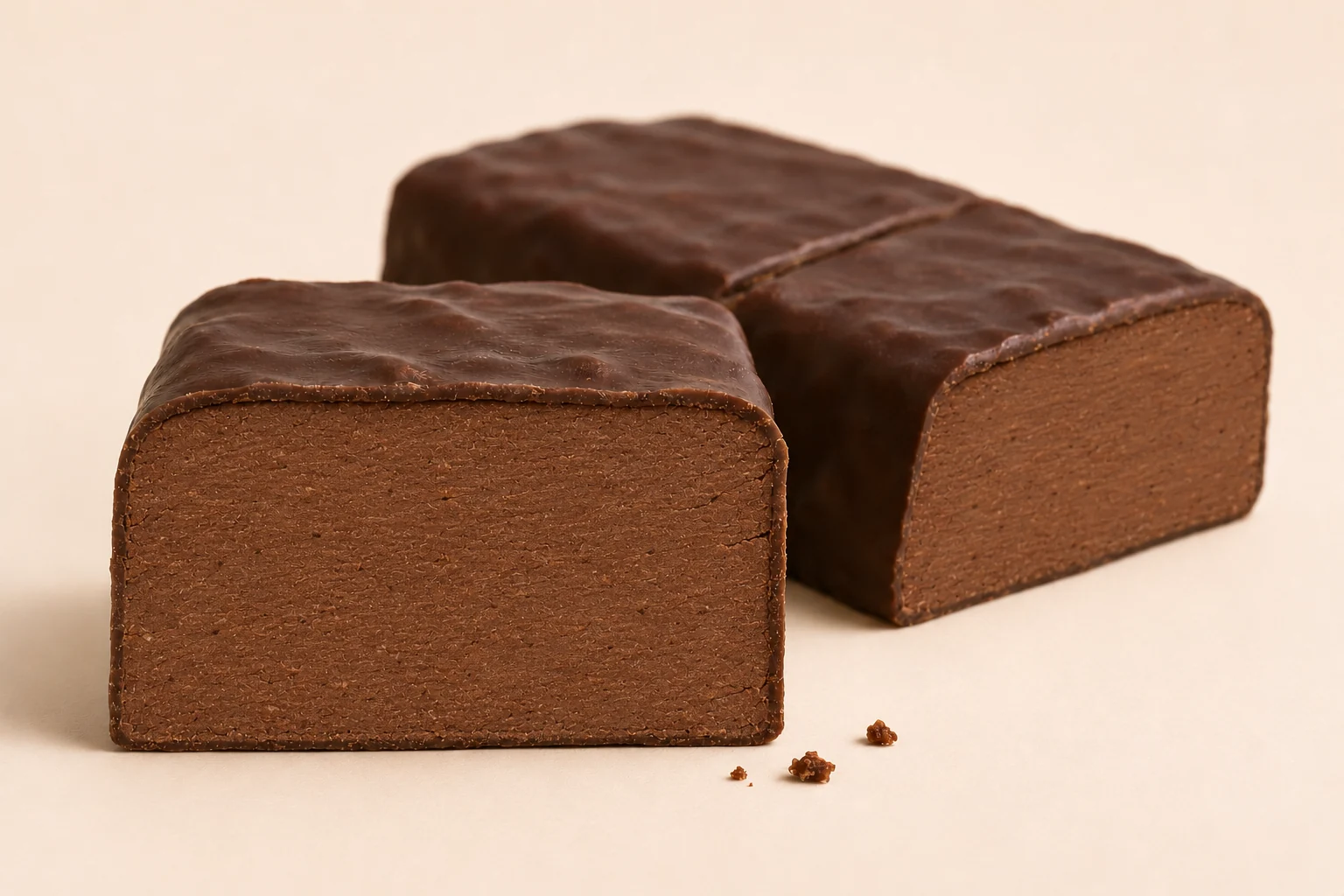
Protein target per whole bar
Our most protein-dense target.
A dense, close-textured protein centre with tiny inclusions, rather than a separate soft filling.
Targets and product visualizations for the upcoming launch. They do not guarantee final nutrition, texture or appearance. The up-to-100g formulation is our most ambitious protein target; feasibility and final values are still being tested.
The ingredient direction combines milk and whey proteins with oats, a binding syrup and fats. The flavour determines the additions: cocoa and nibs, roasted peanut paste, almond and vanilla, or cocoa biscuit crumbs.
The 33g target leaves more room for visible oats and nut pieces. The 66g target calls for a finer blend. The up-to-100g target needs a much more protein-dense centre, with smaller inclusions. Nut pastes are blended through that centre rather than added as a separate creamy filling.
Expected allergens include milk; peanuts in Chocolate Peanut Butter; almonds in Vanilla Almond; and wheat/gluten in Cookies and Cream. Oats, other ingredients and cross-contact still need confirmation. These are not final ingredient or allergen statements.
Sugar, fibre, saturated fat, salt, net weight, shelf life and exact dimensions remain to be established. We will publish the final label before live orders open. The bars are not presented as nutritionally complete meal replacements.
Size & portions
One substantial bar in each wrapper, scored into four equal portions. Start with a quarter, take half, or choose the amount that fits your day.
How to divide the bar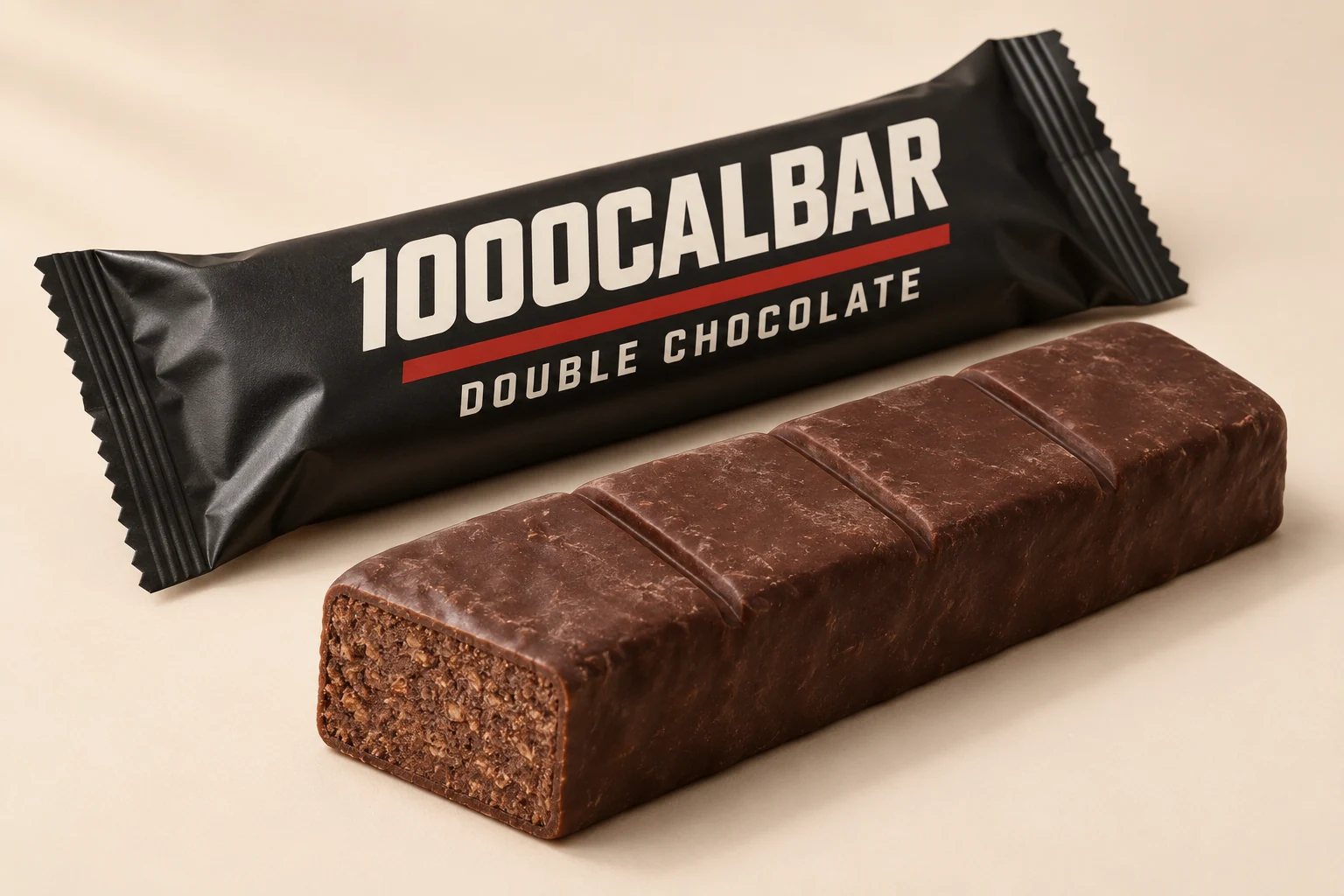
Four connected quarters. Illustration shows the portion split, not physical scale.
One quarter · 66g protein-target formulation
| Amount | kcal | 33g* | 66g* | Up to 100g* |
|---|---|---|---|---|
| ¼ bar | 250 | 8.25g | 16.5g | ≤25g |
| ½ bar | 500 | 16.5g | 33g | ≤50g |
| ¾ bar | 750 | 24.75g | 49.5g | ≤75g |
| Whole bar | 1000 | 33g | 66g | ≤100g |
*Pre-launch targets. Final label values will be published before orders open. Nutrition details.
These illustrative budgets use 4 kcal per gram of protein, 4 kcal per gram of available carbohydrate and 9 kcal per gram of fat. For example, the 66g target gives 264 + 340 + 396 = 1,000 kcal.
Real label calculations depend on the ingredients, fibre and other factors. This is a design model, not a tested production recipe. Protein ingredient purity, taste, texture, moisture and stability still have to work together. The up-to-100g target is particularly demanding and may change.
General energy factors: FDA nutrition labelling guidance. High-protein bar development and texture: Arla Foods Ingredients. These sources explain the principles; they do not validate 1000CalBar.
Read the calorie calculation